
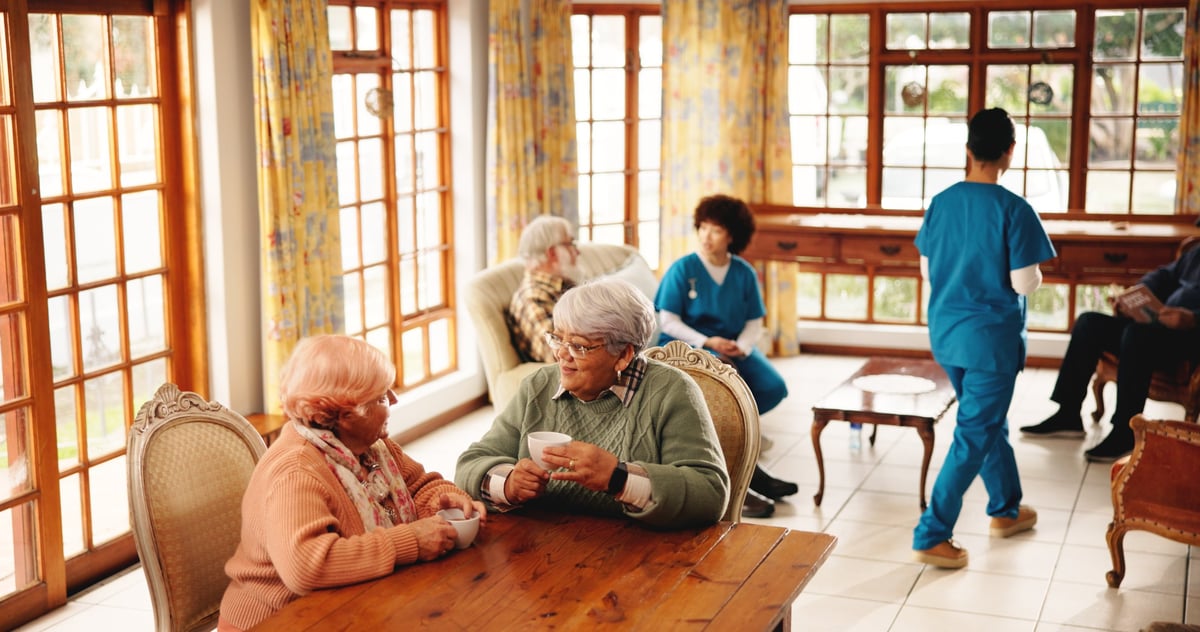
Two older women enjoying coffee and conversation together in a comfortable home setting

Board and Care Homes in Southern California

Board and care homes are licensed residential care facilities, formally called Residential Care Facilities for the Elderly, or RCFEs, in California. They provide care in a house rather than a purpose-built community, usually serving a small number of residents. ElderPath helps families across San Bernardino County, Los Angeles County, and Orange County understand whether this setting fits their loved one.

Always free for families

ElderPath is paid by the community a family chooses, as a referral fee.

What Board and Care Homes Are

A board and care home is a licensed residential care facility operating in an ordinary house in a residential neighborhood. In California these are formally known as Residential Care Facilities for the Elderly, or RCFEs, and they are regulated by the California Department of Social Services. They provide meals, help with daily living activities such as bathing and dressing, supervision, and assistance with medications, depending on their license and staffing. What distinguishes them from larger communities is not the level of care so much as the scale and the setting.

Smaller Resident Populations

Board and care homes typically serve six or fewer residents, though some licensed homes serve more. That number is the defining feature of the setting. With fewer people in the house, staff know each resident's preferences, routines, and habits, and care tends to be more individualized as a result. For a parent who finds large communities overwhelming or impersonal, or who does better with a consistent, familiar routine, this can matter a great deal.

The Residential Setting

Because a board and care home is a house, it looks and functions like one. Residents eat at a shared table rather than in a dining hall, spend time in a living room rather than a common area, and often have access to a backyard. For many families, this is the reason they choose one. The setting can feel less institutional and more like a home, which matters particularly for a parent who has resisted the idea of moving into a facility.

Meals and Daily Living Assistance

Homes typically provide three meals a day, prepared on site, along with help with bathing, dressing, grooming, and toileting as needed. Many provide medication management or reminders. Housekeeping and laundry are usually included. What is provided varies from home to home and depends on the license and on how the home is staffed, so it is worth confirming these specifics rather than assuming.

Mobility and Memory Support

Many board and care homes can support residents with mobility limitations, including those using walkers or wheelchairs. Some can accommodate higher levels of physical assistance. Memory support depends entirely on the individual home. Some specialize in dementia and Alzheimer's care and are staffed for it. Others are not equipped to support residents who wander or who need a secured environment. If memory loss is a factor, ask directly what the home is licensed and staffed to handle.

How This Differs from Larger Assisted Living

Assisted living communities are purpose-built and typically larger, with more amenities, a wider range of activities, multiple dining options, and often a broader service offering. Board and care homes offer fewer amenities and less programming but more individualized attention and a smaller, more familiar environment. Neither is inherently better. The right choice depends on whether your parent would thrive with more activity and structure, or whether they would do better in a quieter setting with fewer people and more consistency.

How ElderPath Helps

We start by understanding your loved one's care needs, mobility, memory concerns, preferred location, budget, and what kind of environment would suit them best. From there we help identify board and care homes that may genuinely fit, including smaller homes that are not always easy to find through a general search. We can help coordinate visits and stay available as you compare. Because small homes vary enormously from one another, knowing what to ask matters more here than almost anywhere else, and we help you ask the right questions. Our role is guidance. Your family makes the final decision.

ElderPath provides non-clinical placement and referral guidance. We do not own, operate, or supervise any community, and we do not provide care or make clinical assessments. Licensed communities independently determine admission eligibility, care requirements, pricing, and resident care plans.

Questions to Ask on a Tour

These apply to any community you visit. Asking them consistently is the fastest way to compare settings on substance rather than atmosphere.

  • How many residents does this home serve, and how many staff are on duty?
  • How is staffing handled overnight and on weekends?
  • What level of care is this home licensed to provide?
  • What happens if my parent's needs increase beyond that level?
  • Who prepares meals, and can dietary needs be accommodated?
  • How are medications managed and administered?
  • How do residents get to medical appointments?
  • What is the process for a resident who becomes ill?
  • How do you communicate with families about day-to-day changes?
  • Can I speak with a current resident's family member?

Where We Help Families Find Board & Care

ElderPath serves families across San Bernardino County, Los Angeles County, and Orange County. Explore senior living options in a specific city.

Board & Care Questions Families Ask

What is a board and care home?

Board and care homes are licensed residential care facilities, formally called Residential Care Facilities for the Elderly, or RCFEs, in California. They provide care in a residential house rather than a purpose-built community, and they typically serve a small number of residents, often six or fewer. They offer meals, help with daily living activities, supervision, and assistance with medications depending on their license and staffing.

How is a board and care home different from assisted living?

The main difference is scale and setting. Assisted living communities are typically larger, with more amenities, more activities, and a broader range of services. Board and care homes are smaller and operate in a house, which means fewer residents, more individualized attention, and a more home-like atmosphere. Some families find the smaller setting less overwhelming, particularly for a parent who would find a large community confusing or impersonal.

Are board and care homes licensed and regulated?

Yes. In California, board and care homes are licensed as Residential Care Facilities for the Elderly and are regulated by the California Department of Social Services. Licensing determines the number of residents a home may serve, the level of care it can provide, and whether it may accept residents with specific conditions. You can verify a facility's license status through the state's Community Care Licensing Division.

How much do board and care homes cost?

Board and care homes often cost less per month than larger assisted living communities, though pricing varies by location, the home's size, the room arrangement, and the level of care provided. Some homes charge a flat rate and others tier their pricing by care level. Every home sets its own rates. ElderPath helps you understand what is included so you can compare accurately. Our service is free to families.

Can a board and care home support someone with memory loss?

Some can, depending on their license and staffing, and some specialize in it. Small homes can be a good fit for residents with memory loss because the environment is familiar and the routine is consistent, though not every home is equipped or staffed for it. Ask directly what level of cognitive support the home can provide and whether it has experience with dementia or Alzheimer's residents.

What should we look for when visiting a board and care home?

Look at how the residents seem, not just the house. Are people engaged, clean, and comfortable? Are staff interacting warmly or simply supervising? Ask about staffing overnight and on weekends, how meals work, whether there is a plan for medical appointments, and what happens if your parent's needs increase. Visit more than once and at different times of day, because a small home can feel very different at 10am than at 7pm.

What happens if my parent needs more care than a board and care home can provide?

That is an important question to ask before you decide. Homes licensed as RCFEs can provide a defined level of care, and at some point a resident may need more than that license allows, at which point a move would be necessary. Ask each home what its limits are and how it handles that transition, so you understand the possibilities ahead of time rather than discovering them in a crisis.

Let's Find the Right Board & Care Community

Tell us about your loved one and we will help you understand the options worth considering. Free for families, no obligation.